PORTFOLIO
Explore My Work
- Published articles featuring a travel essay collection and educational essay.
- Produced and published recorded interviews with an author and publishing professional, researching, interviewing, recording, and editing conversations on writing craft, publishing, and creative careers.
- Was the Production Editor for a collection of short stories, successfully guiding the project from draft to publication.
- Copywriting and editing for small-to-mid-sized organisations, refining and producing content across multiple platforms — including social media, fashion catalogues, and publisher content.
- Designing professional documentation, book interiors, and marketing content for publishing and travel-focused projects.
Published Articles
Travel Essay Series
GRATTAN STREET PRESS
Produced two reflective travel essays articulating personal travel experiences through cultural insight and deep self-reflection. Collaborated with the online editorial team to prepare pieces for publication.
“We travel ‘to lose ourselves…to find ourselves’. We travel to see what lies outside the small glimpses brochures provide us, to turn ignorance into awareness and to disrupt the mundane. In doing so, we discover our true selves.”
A Glimpse into My Travels and Journey of Self-Discovery Part I
August 27, 2021

Unable to travel during the pandemic, I reflect upon my travels in Japan, Egypt and Morocco and how they have shaped me into who I am today.
A Glimpse into My Travels and Journey of Self-Discovery Part II
October 12, 2023

In the receding shadow of a ‘global phenomenon’ we could finally return to travel. I journey to Canada, the UK and Ireland, and New Zealand in hope of returning to my ‘true self’.
Educational Article
GRATTAN STREET PRESS
A Novel Approach: The 5 Steps of Screenwriting Advice All Novelists Should Know
May 12, 2022
Researched and wrote an educational article bridging screenwriting techniques and novel writing practices, drawing from industry professionals and personal experience.
Findings are summarised into five actionable step which allowed me to write 85,000 words in 4 months.

Journalism
Interviews
UNIVERSITY OF MELBOURNE
I spoke with an author and publishing professional to explore the creative processes, challenges, and pathways that shape the literary world.
Christine Balint on Writing Craft and Her Publishing Journey of ‘Water Music’
May 28, 2022
In this episode, I speak with author Christine Balint about her approach to writing, the challenges of creative practice, and the unexpected journey behind her novella Water Music. A shortlisted author for the Australian/Vogel’s Award and the author of three published titles, Christine shares insights into developing ideas, overcoming creative obstacles, and transforming an abandoned storyline into a competition-winning work.
Read full transcript
Taylor 0:11
Thank you so much for taking the time to speak with me, Christine. So my first question is, what is your personal approach to writing?
Christine 0:19
So the starting point for me does usually come from a research interest, and not being a historian myself, I usually come from a position of not knowing very much at all, and the interest for me is in wanting to find out more about a particular time, place and sometimes event or person, depending on the particular project.
Plot for me is my biggest challenge. It doesn’t come naturally. I will write a lot of notes and plan out a plot. But then somehow once I start writing, I very quickly deviate from what I planned. Some ideas come as you go. In fact, probably most of them will come in the mid flow of writing. It helps to have the planning at the beginning, even if you deviate quite substantially from it.
Taylor 1:05
You are leading perfectly into my next question, which is what challenges do you face as a writer and how do you overcome them?
Christine 1:11
So because a project can last for a very long time, you can be in your own head and in your own space for years without having any real interaction with people. Some days you do write better than other days, and you can tell, but also the other issue is that you sometimes can’t tell, and that is actually the scariest point: where you can’t see what needs to be done, or you feel like something’s not working, but you’re not sure what isn’t working.
A few things that I do to try and overcome that: nearly every day when I sit down to write, the first thing I do will be to write in a kind of diary journal type thing, and it’ll be usually just a brain dump of whatever’s in my head and it’s usually nothing to do with writing, it’ll be what I did on the weekend or what I’m worrying about or what I have to do.
But what I do put in there, often, I’ll put what I’m up to in the book, and if I am planning to do something, or working on something particular. So it can be useful because often life does get in the way, and you might have a few weeks in between being able to actually have the time to write, and that diary document is often quite useful because it helps me fast track my way back in, so I can get back to where I was.
Taylor 2:25
That’s great advice. Thank you. I was just wondering if you could tell us a bit about your publishing journey with Water Music?
Christine 2:31
I ended up with a novel that was about 100,000 words, and I couldn’t see what more to do with it. So I sent it out. And that was a difficult experience because it took quite a long time to get any feedback from publishers until I got, after a year or so, a couple of pages from my editor and she said that she loved some aspects of it and that she had a few suggestions.
And one of the things that this editor said was that two voices were a bit similar. Which I had known in myself, and this Lucietta character, she had too much of her own story which was separate. But I pulled out all those chapters and shoved them in a separate Word file, and then went back to working on the rest of the novel with the two alternating voices, and then COVID hit, and I saw that there was a novella competition.
But I checked the word count that they wanted, it was somewhere between 20–45,000 words or something. And I thought, I wonder if those chapters I deleted might be the right length for a novella. And they were. So I worked it up and I sent it in, and then I found out a few months later that it had won the novella competition, so that was how it came about.
Taylor 3:45
Do you have any parting advice for any aspiring writers listening in?
Christine 3:50
I mean it’s important, obviously, to have a goal and to be disciplined and motivated and however that comes for you, and deadlines can be really useful. But also, you know, to maintain your mental health, I think it’s important to think about why am I doing it, and am I strong enough right now to send this out if it isn’t going to be picked up?
As soon as you can, start writing, even if it’s drafting material that you end up not being able to use. And keeping your love of the actual work and not being too focused on the end result.
Mark Davis on Preparing to Enter the Publishing Industry
May 28, 2022
In this episode, I speak with Professor Mark Davis about building a career in publishing and developing the skills needed to enter the industry. Drawing on his extensive experience as a journalist, designer, production manager, publishing professional, and academic, Mark shares advice on approaching job applications, recognising transferable skills, and understanding the changing landscape of publishing.
Read full transcript
Taylor 0:11
Do you have any advice for those wishing to enter the publishing industry, say, from an application standpoint?
Mark 0:14
Write to people. Find out about companies, find out who works for them, find out what they’re doing, and write a nice one page pitch letter about who you are, and what you can do, and why you would be great working in the company.
Be bold, and don’t oversell yourself, but at the same time, be imaginative. You know, that’s what publishing runs on, right? It runs on imagination, it runs on ideas and imagination. And be entrepreneurial, like people forget the business is entrepreneurial. So that’s about having ideas and that’s about creating value that people want.
So think about how you might add value to a company that you’re going to pitch to. It’s all about value proposition. And I know I sound like a marketing guy when I’m saying that, but it’s how the world runs. That’s the oil of the machine: is value.
Taylor 1:07
Okay, so what would you describe as key transferable skills, both industry and non-industry related, that should be included in your cover letter?
Mark 1:16
So put in your concrete skills; like your hard skills, so editing skills, marketing skills, desktop-publishing skills, technical writing skills, whatever skills you’ve got, show them, and just briefly but clearly show that you’ve done it. You can talk about editing, and what you’ve edited. What you’ve marketed, you know, things you’ve done.
And you know what companies are looking for often are those people who are self-starters, who aren’t going to need a lot of hands-on attention, who can really just walk in the door, and after a period of adjustment, which will take a few weeks obviously, start to use their skills in a way that is not requiring heaps of supervision and so on.
But also show that you’re going to have ideas, that your voice at the table is not going to be an intrusive voice. You know, you’re not there to tell everyone how to do their job. But at the same time, ideas are what makes the business run, and you know, if you can be in that frame of mind, where you’re thinking about what people and what books people want to buy in 12 months, two years’ time, and workshop the ideas with your colleagues and just put ideas into the mix and show that you’re capable of doing that — that’s really great.
Taylor 2:26
I like that. Thank you very much. But on another level, what do you see as the biggest challenge the publishing industry currently faces?
Mark 2:36
I think the biggest challenge facing the book publishing industry isn’t actually technological. I think it’s demographic, and it’s to do with ageing readerships. So what can you do to sell books to people who are not older than 50–55, which is still the core audience? I think that’s the big challenge.
You know, this is a question that’s been around since Harry Potter was published, but even before Harry Potter really reignited this question. What do people read after Harry Potter? Because kids famously stopped reading when they were about 14, and then some go on to become YA readers but that’s a small proportion of the number of kids who are still reading books when they’re 12, 13, 14. So, what do you do to keep those kids?
But also how to get people who are 20, 30 reading books? What books are out there for them? How can you capture them? And paradoxically, it’s kind of books that fly under the radar that do that work now.
Taylor 3:31
What do you believe is required to overcome an issue like that?
Mark 3:33
What do people want? Maybe what do people need, as well, that they don’t know they need yet? And how do you get it to them?
Hundreds of hundreds of books are published every year and you want your books to be the ones that succeed. So figuring out what people want, and a lot of that’s just observational. That’s the way traditional publishers have done their market research: by going into dinner parties, by sitting around in cafes and overhearing conversations, by standing around in bookshops and sort of eavesdropping on what people say, or watching what people pick up and what they don’t.
The more you know about what’s going on out there, the better.
Editorial: Production Editor
Short Story Collection: Love & Other Rituals
GRATTAN STREET PRESS
As Production Editor for Love and Other Rituals by Monica Macansantos (2022), I guided the collection from manuscript to print, coordinating authors, designers, copyeditors, proofreaders, and printers to ensure on-time publication.
- Created briefs and guides for editorial and design teams
- Reviewed layouts and typesetting for editorial and visual quality
- Edited for clarity, consistency, and voice
- Proposed and developed cover concepts
Outcome
- Streamlined editorial processes for future projects into a comprehensive 20-page handover report (available on request)
- Published the book on schedule
- The project received positive feedback for clarity, collaboration, and workflow


Copywriting & Editing
Fashion Catalogues
FIELDS KNITWEAR
Edited fashion catalogue copy and other documentation such as care labels; collaborating with marketing team to ensure clarity and tone consistency.

Publishing Newsletters
BUSYBIRD PUBLISHING
Wrote and edited weekly newsletters and social media copy for a small publisher, focused on engaging author and reader communities. Edited content for tone and readability. Collaborated with publisher to maintain accuracy of brand.

Editorial & Marketing Design
Short Story: Oscarisms
BUSYBIRD PUBLISHING
Designed and typeset the interior layout and cover for Oscarisms: Wisdom from a Seeing‑Eye‑Dog Dropout, applying typography and layout principles for readability. Collaborated with the author and production editor through to final submission.
Outcome
- Submitted final files to IngramSpark for publication.
- Published the book on schedule.
- Credited as the Designer.


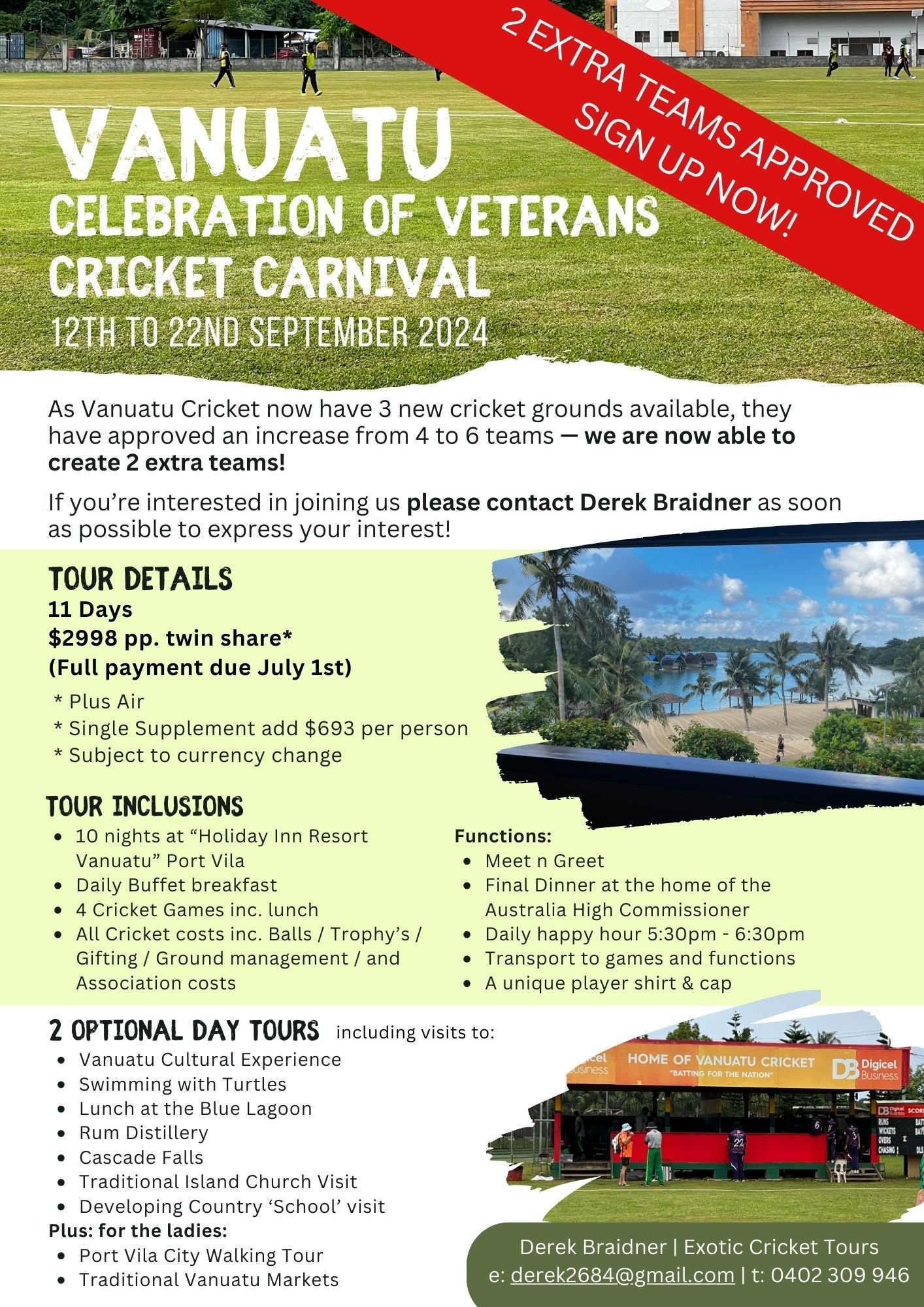
Travel Content Design
EXOTIC CRICKET TOURS
As a Freelance Editorial Consultant & Designer I provided editorial support and design guidance.
I reviewed initial social copy drafts and suggested adjustments to tone, structure and design for greater audience resonance to travel content.